Cover Story
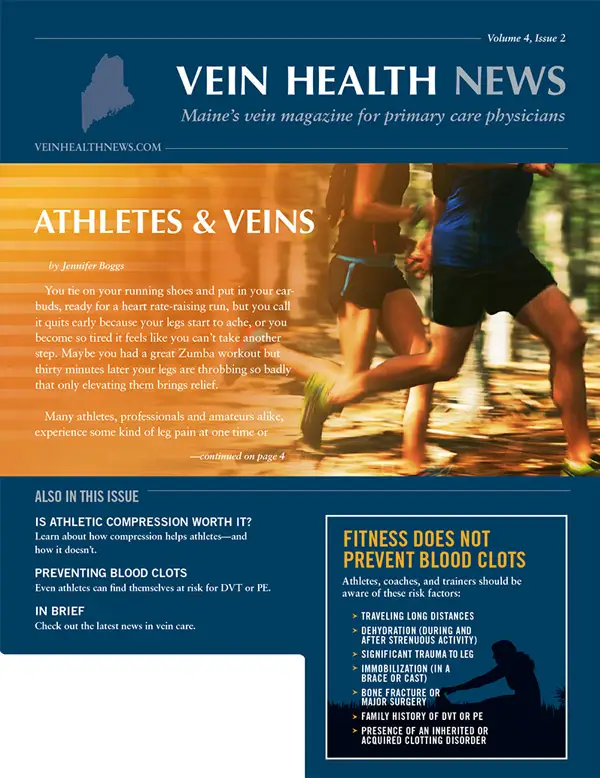
Athletes & Veins
By Jennifer Boggs | Feature
You tie on your running shoes and put in your earbuds, ready for a heart rate-raising run, but you call it quits early because your legs start to ache, or you become so tired it feels like you can't take another step.
Maybe you had a great Zumba workout but thirty minutes later your legs are throbbing so badly that only elevating them brings relief. Many athletes, professionals and amateurs alike, experience some kind of leg pain at one time or another, whether from the mechanics of pounding movement on a hard surface, or keeping their legs in the same position for extended periods. But rarely do they attribute the discomfort to a dysfunction in their venous (veins) system.
According to Dr. Todd Hansen, vein specialist and co-founder of Carolina Vein Associates in North Carolina, not all aching legs are simply due to physical activity, or even the effects of aging. "You can talk yourself into minimizing those symptoms and not realize that it's actually vein disease that's causing them, not that five-mile run," said Dr. Hansen. "Let's change the first reaction and realize that leg pain in general is not normal, then let's investigate what things could possibly produce those symptoms."
The role veins play
While the arterial side of the human cardiovascular system has been studied extensively, much less research has been conducted on veins, also referred to as the venous system. Yet, the veins contain approximately 70 percent of the body's total blood volume when a person is at rest. Healthy veins carry deoxygenated blood back up to the heart, while the "muscle pump" action caused by the flexing of our feet and calves help the blood to travel against gravity.
In leg veins, there are valves that open to allow the blood to flow one way: up. If the valves in the veins become damaged, some blood will flow backwards into the legs and "pool" there, resulting in a feeling of heaviness, leg pain, or other symptoms. This is sometimes referred to as "venous reflux."
Who's at risk?
Some of the symptoms of vein disease are obvious: visible blue- or purple-colored "spider veins," bulging varicose veins, or even open wounds (leg ulcers) on the leg or ankle. Other symptoms are much more subtle. In addition to achiness and swelling, sensations like an itching or tingling in the legs may be an indication of vein insufficiency. Leg cramps after long periods of inactivity, or while lying in bed at night, are another possible symptom.
Some people may experience no symptoms at all, and some merely accept them as an unavoidable byproduct of physical fitness. "You can be in great shape and still have a vein disease that's slowly developing," explained Dr. Hansen. "It's so easy to assume that your legs are tired because of physical activity. That's why primary care physicians—and patients themselves—need to be aware of the symptoms and risk factors."
Since venous disease has a strong genetic component, one of the biggest risk factors for vein disease is heredity. If someone in your family has experienced vein disorders or has visible varicose veins on their leg, your risk of the disease is much higher. If one parent has vein disease, you have a 30-40% chance of developing vein problems; if both of your parents do, your risk goes up to 80-90%.
Another risk factor is age. As the body ages, a decrease in the production of collagen causes the veins to change and the valves more likely to fail, especially in the superficial veins (veins that are close to the surface of the body), which is why there is a higher incidence of varicose veins in the elderly population. (It's worth noting that although seniors have a fifty percent greater chance of suffering from venous insufficiency, their success rates after venous treatment are no different from the their younger peers.)
Gender also plays a role in varicose veins and other vein issues. Women are almost 2 ½ times more likely to have vein disease than men. A woman has three "high risk" times in her life that can produce dramatic hormonal changes that influence vein health. First, menarchy; second, if she becomes pregnant; finally, when she enters menopause.
Although there are some risk factors we cannot control, there are environmental factors that can be minimized. Standing or sitting for long periods of time, especially with your legs bent or crossed, may raise your risk for vein problems. Likewise, lying in one position for too long can cause serious vein problems. Patients in the hospital or on bed rest, for example, may experience a slowdown in blood flow that can lead to blood pooling in the extremities.
How exercise impacts veins (and vice versa)
During exercise your muscles require more oxygen, so veins dilate to increase the volume of blood flowing through the circulatory system—but if your veins are not working properly, that means more blood can pool in your legs. On the other hand, exercise is beneficial from a venous standpoint because anything that improves the function of the foot and calf muscle pumps to get the blood back up to the heart is good. Most vein specialists agree that walking is the best exercise for improving the muscle-pump function, especially following vein treatment.
Dr. Hansen believes that walking is great "wherever you are on the venous spectrum," though he stresses that while walking can help manage the symptoms, it doesn't prevent vein problems. Neither does exercise cause vein problems, except in extreme cases. Physical activities that require your legs to support heavier weight over prolonged periods of time, such as weightlifting or backpacking can put someone at increased risk for developing venous issues. Repeated exposure to increased intra-abdominal pressure, or pressure that is transmitted to lower extremities, can cause the normal system of valves and veins to weaken over time and become incompetent. Repetitive motion sports such as endurance running, cycling and tennis can also put a lot of stress on your leg veins and over time may overcome a normal venous system.
In general, exercise (and working out the muscle pumps) is not detrimental for the vast majority of athletes who are participating in a more typical spectrum of activity. In fact, maximizing the efficiency of that system is beneficial. Depending on each individual's degree of vein disease, he or she may become more symptomatic because the foot pump no longer counters the vein insufficiency. One person's level of activity, for instance, may be associated with the progression of vein disease if they have some pre-existing risk factors, such as age or family history.
While exercise can influence vein dysfunction, it doesn't necessarily prevent it or cause it. But can poorly performing veins affect athletic performance? The short answer is yes. If the venous system is not working correctly, then the "extra" de-oxygenated blood (and blood waste products like lactate) can cause discomfort, cramping, fatigue, or other conditions that diminish performance. Even if legs feel great during training, vein issues can also cause legs to hurt after exertion and slow your recovery.
Fixing the problem
If vein problems keep someone from doing activities that aggravate his or her vein symptoms, then choosing alternate activities is one way to cope. Some people may find that swimming, for example, does not produce the same discomfort that running does. Athletes can live with the problem, but Dr. Hansen emphasizes that they don't have to: "There are so many options for treatment so that people can continue doing their favorite sports or whatever activity they're passionate about. They might even see an improvement in their performance."
Modern treatments have excellent initial and long-term success rates when performed by an experienced phlebologist (vein specialist). Endovenous approaches are minimally invasive treatments used to address specific large varicose veins in the legs. Endovenous ablation (EVLA) is considered the gold standard in the treatment of venous symptoms, with success rates between 90% and 98% after five years. It has largely replaced previous, more invasive standards of care, such as vein stripping.
Another option for treatment is sclerotherapy, performed either with ultrasound-guidance, or with a light-assist, which seals the vein wall of small varicose veins allowing them to fade away. With both EVLA and sclerotherapy, patients can walk the day of the procedure and return to normal activity, including moderate exercise, within a few days.
The key to safe, effective vein treatment is to consult with a board certified vein specialist who can evaluate the entire venous system so that poorly functioning veins can be treated at the source. "Athletes can have vein disease with or without visible signs, so we need to be vigilant about not automatically attributing leg pain to the effects of aging or exercise," said Dr. Hansen. "There may be underlying reasons that you've never even considered."
Performance
Can Compression Raise Your Game?
By Jennifer Boggs
Vein specialists have long touted the benefits of graduated compression garments for patients with venous symptoms, but in recent years, athletic coaches and fitness trainers have begun to get on board. Compression socks or stockings are worn over the leg and foot to create a gradient "squeeze" that is greatest at the ankle and lessens up the length of the garment. Compression works by helping the muscles in the legs to pump the de-oxygenated blood back up towards the heart to prevent "pooling" in the lower limbs.
Compression worn on the legs can help athletes at every level in three ways: during the activity, post-activity recovery, and during long-distance travel. During exercise or sports, compression increases calf muscle-pump efficiency, which clears out lactic acid and prostaglandins more effectively and results in less muscle soreness during and after the activity. Compression has also been found to reduce muscle pain in the leg by reducing the myofibril microtrauma, or tiny damage to the slender threads of muscle fiber along the muscle.
The real question for many athletes is: will compression improve my performance? According to Travis Beaulieu, Director of Marketing at Black Bear Medical, a medical equipment company in New England, the answer is yes...and no.
"The more efficiently blood flows through our bodies, the more likely we are to recover quickly from workouts and injuries and be in better condition to train more often or at a higher intensity, thus improving performance in the long run," said Beaulieu. "Although compression can minimize things like calf strains, shin splints or Achilles' issues, I don't think it's going to take a minute off of your mile."
Most studies have not been able to demonstrate any statistically significant difference in performance while wearing compression sleeves or stockings, but anecdotal reports from athletes suggest that compression can help improve athletic performance, at least from a psychological point of view. In other words, if someone believes that the effects of compression help optimize performance, it just might. Although there has been little evidence that compression actually improves performance, athletes with venous insufficiency should consider wearing graduated compression during sports events to reduce swelling and venous pooling.
There is more research that supports the benefits of post-exercise compression, including promoting the removal of lactic acid and relieving delayed onset muscle soreness after a strenuous workout. Compression is a must for athletes who travel for competitions, especially post-competition and on long flights. Extended periods of immobility can be associated with deep vein thrombosis, or DVT, a blood clot in the deep vein system. DVT can be cause for concern because the clot could break free from the vein wall and enter into the blood stream, traveling to the lungs and become a PE (pulmonary embolism), or to the brain and result in a stroke.
Choosing the right garment
Depending on the manufacturer, sports compression comes in a variety of styles, colors, and materials. For lower extremities, a compression sleeve covers the calf and lower leg but not the foot and ankle like a compression sock or stocking does. Beaulieu warns that there is some possibility for swelling to occur in the ankle where the sleeve stops. "Make sure you're applying them correctly, and only wear calf sleeves during activity, not before or after," he said.
Calf sleeves are very popular among athletes because they're easy to get on and off and are applicable across many types of sports. Beaulieu finds that runners, who are usually particular about the socks they wear, often wear calf sleeves so they can still wear their favorite socks. Although sleeves provide compression from ankle to knee, it is important to get the full compression offered by a compression sock or stocking post-exercise to receive the most benefit in recovery.
Most athletes who use compression are long-course endurance athletes, however, tennis players, golfers, or anyone who is moving around on their legs may find that their legs feel better with compression. There are numerous options on the market for hikers; hiking socks come in wool and other materials appropriate for various climates. Compression works well for hikers to support good venous return, since they often put excessive stress on their calves as they walk uphill.
Compression garments come in a variety of grades. The gradient compression is expressed in millimeters of mercury, or mmHg, which is the measurement of how much compression or "squeeze" that is placed on the leg: the higher the number, the greater the compression. Socks and stockings are graded on the basis of the strength of the compression at the ankle.
Most athletic compression is 20-30mmHg, with some in the 10-20mmHg range. Compression is available over the counter, but remember to look for graduated, or gradient, compression, meaning the pressure is highest at the foot and ankle and gradually decreases as the garment rises up the leg. Some products marketed toward athletes may not be graduated and will not provide the benefits. Buy from a reputable company, one that has tested their products and lists the level of graduated compression on the packaging.
A good fit is also critical. Different brands fit individuals differently. Be sure you get properly measured and try the garment on if you can. Beaulieu and his colleagues will measure the ankle and calf circumferences on a customer's leg, as well as take into account his or her shoe size. "With all of the sizes, colors and types, it can be overwhelming, but once you find your style and fit you have another tool in your fitness toolkit."
It's important to note that graduated compression should not be worn to bed, unless specifically cleared by a healthcare provider. ("T.E.D." hose are not the same as graduated compression stockings.) Potential contraindications to graduated compression include arterial disease, diabetes, and congestive heart failure, although that doesn't mean that those who suffer with these conditions can't wear compression. Graduated compression is a good tool to consider, whether one is an elite athlete, weekend warrior, or just likes to keep active.
Safety
Athletes vs. Blood Clots
By Jennifer Boggs
Tennis superstar Serena Williams. Olympic speed skater Rebekah Bradford. Miami Heat center Chris Bosh. What do these sports pros have in common? All have suffered from blood clots in their lungs that originated in their deep vein systems.
The deep vein system carries about 80% of blood from the feet back up to the heart. Deep veins are located under the muscle and connective tissue layers in the legs. A blood clot in a deep vein—known as deep vein thrombosis, or DVT—can be dangerous because the high pressure in the system could cause the clot to break free from the vein wall and enter the blood stream. The DVT could then travel up through the legs into another part of the body such as the lungs, where it would become a pulmonary embolism (PE).
Most people, including some healthcare providers, think that blood clots are a problem that occurs in the elderly, not in healthy, often young, athletes. However, in some cases, athletes may be at a greater risk for DVT than others.
"All the risk factors lined up"
Dr. Tamara Lovelace is the Chiropractic Sports Doctor and Clinical Director of Seacoast Spine & Sports Injuries Clinic in New Hampshire. She has worked extensively with athletes of all genres, from the high school to the professional level, including working with U.S. Olympic athletes. According to Dr. Lovelace, there are a number of risk factors that are not uncommon among athletes, including trauma, bone fractures, major surgery, and immobilization with a brace or a cast following a traumatic injury.
"We need to consider how these risk factors work together to increase the likelihood of a clot," she said. "Traveling long distances in a car, bus, or on an airplane can result in some immobilization; this often precedes and follows competitive events where the athlete may have become dehydrated or experienced some traumatic injury."
Dr. Lovelace knows about the combined risks of DVT firsthand. When she was 32, she was an elite paddler competing for the U.S. National Dragon Boat Team and traveling from a competition in California to the World Championships in Penang, Malaysia. She said, "All the risk factors lined up perfectly for me on that trip." Dr. Lovelace had been on the international flight after three full days of intense competition in the hot sun. She was dehydrated and slept curled up in a ball for most of the long trip.
When she landed in Hong Kong, her right lower leg was "in excruciating pain and swollen about twice its usual size." The team's medical resources were limited due to their location, but the staff put her on a course of blood thinners and she was able to compete. The DVT resolved with anti-coagulant medication in the following two weeks.
Dr. Lovelace has not had another DVT since, although she notices that she experiences a lot more swelling in her legs when on her feet for long periods of time. Now she wears compression stockings to help reduce swelling whenever she travels on planes. When she travels with Team USA's BMX Team, they bring a NormaTec Recovery System, a device that provides external dynamic compression to help with venous return. The athletes use it after training sessions and competitions to help with quicker recovery, and everyone on the team uses it after long travel days to help with recovery and circulation.
Stopping blood clots in their tracks
DVT or PE symptoms are often misinterpreted as something less serious. A blood clot in the leg may feel like a "Charlie horse," shin splints, or a twisted ankle. Symptoms from PE are often attributed to a pulled muscle in the chest, costochondritis (inflammation of the joint between ribs and breast bone), asthma, or a "touch of pneumonia."
So what are some of the signs that athletes should look for? For DVT, the leg may be warm to the touch; swelling in the leg (can also occur in the arm, especially in weightlifters, gymnasts, and rowers); leg (or arm) pain or tenderness; reddish or bluish skin discoloration. For PE, be aware of a sudden shortness of breath; sharp, stabbing chest pain (may get worse with deep breath); rapid heart rate or breathing; feeling lightheaded or fainting; unexplained coughing, sometimes with bloody mucus.
In half of DVT and PE cases, no symptoms present at all—but both conditions are medical emergencies. Any of these symptoms should be regarded as a DVT or PE until proven otherwise, especially if someone is in a risk category (including whether there is a history of blood clots in your family).
As with all health disorders, treatment of blood clots depends on many variables, including the individual's health background and the extent and location of the clot. Prevention, of course, remains the best medicine. To prevent DVT, active people should, first and foremost, recognize that DVT and PE can occur in athletes. They should stay well hydrated before, during, and after athletic events; stretch legs and pump feet when traveling long distances, and consider wearing graduated compression stockings; know the risk factors and whether your family has a history of DVT. If you have had a trauma or major surgery, or if a cast or brace renders your leg immobile, discuss with your doctor the possibility of prophylactic treatment for DVT.
Whatever your sport, be aware of your body as you train, compete, and travel. Know the symptoms of DVT and PE. And if they occur take them seriously and seek medical attention, sooner rather than later.
Patient Perspective
One Patient's Perspective: Further, Faster
By Benjamin Lee
Nathan Eldridge had no idea what he was in for when he got his varicose veins treated. While he did expect to feel some relief from the leg pain and cramping he had experienced for years, he did not expect to become a better athlete.
The 41-year-old photographer and producer lives an active life and described himself as "always on the go" both professionally and personally. Nathan runs, hikes and swims competitively, practicing almost every day with a masters group at the YMCA. A few years ago, he started to notice that during swim practice, his calves would cramp between 2,000 and 3,000 yards, and he'd have to cut his workout short. He attributed the pain to "getting older" and believed that "this is just how it's going to be."
In his twenties, Nathan began to develop varicose veins in both legs. The bulging veins in his left leg were so severe that he jokingly called it "another brain." "They were so gnarly, blue and bruised-looking that people would ask if I got bitten by a dog!" said Nathan. "They were twisted and raised, like a topographical map, and my hair even turned white on that part of my leg."
He asked several doctors and physical therapists about it over the years, showing them how the bulging veins were considerably warmer than the rest of his leg. They all told him that there was nothing he could do about it, sometimes suggesting aspirin or compression sleeves to manage the discomfort. It wasn't until Nathan visited a Board certified phlebologist that he realized that his symptoms—the cramping, fatigue, and varicose veins—were related to circulation and venous health.
After a physical exam, diagnostic ultrasound evaluation, and a full review of his medical history, Nathan learned that he was predisposed to varicose veins and that if he didn't treat them, his condition would continue to get worse. He decided to have the endovenous laser ablation (EVLA) procedure done on his left leg, and then about eight months later, he had the procedure on his right leg. Recovery from both treatments was relatively quick, and the results were obvious.
"Not only did the cramping go away, my feet stopped hurting. My shoe size went down half a size because they don't swell up like balloons by the end of the day," Nathan explained.
After the EVLA procedures, Nathan began to see other outcomes. Before treatment he had trouble staying hydrated. On the job, he often had to bend over to move something or pick something up, and then "black out" or feel dizzy when he stood up again. He was constantly taking ibuprofen, especially during 12-hour production jobs. He "didn't have ankles" because of the swelling. All of these problems have since disappeared.
Not only has Nathan's quality of life improved, so has his swimming. Because of his previous leg cramping and leg fatigue, it's been awhile since he's attempted the "Peaks to Portland" 2.4 mile open-water swim—but now he's ready to try to beat his 13th place (out of 350) finish.
Nathan summed it up best: "I have new legs as far as I'm concerned. I have more endurance, and I can push myself much harder. I have more cardio, which is surprising to me. I can go further, faster, because the blood is returning and able to take oxygen to the places I need it. I was not aware of how much better I could feel that I could be a faster swimmer, a better athlete."
Vein Tech
Asclera
By Jennifer Boggs
Sclerotherapy has assumed a primary role in the treatment of venous insufficiency, particularly for smaller "spider veins." During the procedure, small needles provide access to the vein so a medicine called a sclerosing agent can be injected into the interior of the troublesome vein. This substance causes the vein to become sticky and seal shut. The collapsed vein is reabsorbed into local tissue and eventually disappears, while the blood flow finds a healthy path back to the heart.
Sclerotherapy can be performed either with ultrasound guidance or light assistance. Light-assisted sclerotherapy is used to treat veins below the skin's surface that are difficult to see. A small, powerful light illuminates the veins and tissue directly below the patient's skin, allowing the physician to clearly identify the source of the venous dysfunction and to perform the procedure. Ultrasound-guided sclerotherapy is used for larger superficial veins that cannot be seen with illumination. Due to the proximity of some of these veins to nerves or arteries, a skilled ultrasound sonographer is critical to the success of this procedure.
Patients often experience relief of symptoms after sclerotherapy, and treated veins often fade within a few weeks, although it may take longer to see the full results. In some instances, additional treatment sessions may be necessary.
The Asclera Solution
Asclera (distributed by Merz in the U.S.) is the trademarked name of polidocanol, the best-known liquid sclerosing agent on the market today. Although polidocanol had been considered the worldwide standard for sclerotherapy for years, the U.S. Food and Drug Administration (FDA) didn't grant approval until 2010.
Chemische Fabrik Kreussler & Co., the German company that developed and commercialized polidocanol as a sclerosing agent, conducted the pivotal clinical study that helped make Asclera available in the U.S. The EASI (Efficacy and safety of Aethoxysklerol compared to Sodium Tetradecyl Sulfate and Isotonic Saline) study looked at more than 300 patients with spider or reticular varicose veins. Of the 316 randomized patients, 160 with telangiectases were randomly assigned to 0.5% polidocanol (POL), 1% sodium tetradecyl sulfate (STS) or placebo (isotonic saline, or IS), and 156 with reticular veins received 1% POL, 1% STS or placebo. Veins selected for injection were clearly visible telangiectases or reticular veins in a predefined 10x10 cm treatment area. Images were taken before first injection and 12 and 26 weeks after the last of three possible injection visits, and evaluated by the investigator and two blinded independent observers.
The EASI study successfully met its primary efficacy endpoint with demonstrated statistically significant superiority (p<0.0001) of polidocanol versus placebo. The treatment success rates for polidocanol were 96% and 95% at 12 and 26 weeks, compared to STS (92%, 91%) and placebo (8%, 6%). A secondary endpoint analysis demonstrated that significantly more patients were satisfied or very satisfied with polidocanol at 12 or 26 weeks (88%, 84%), compared to STS (63%, 64%; p<0.0001) or placebo (13%, 11%; p<0.0001).
Polidocanol was found to be safe and well tolerated in the study. The incidence of side effects, most commonly local tissue reactions near the injection site, was generally lower for patients treated with polidocanol than for patients treated with STS.
Asclera is FDA-approved for the treatment of spider veins that are <1 mm in diameter and reticular veins that are 1-3 mm in diameter. Only a healthcare provider can administer the prescription medicine. Adverse reactions to polidocanol include hematoma, bruising, irritation, discoloration, and pain at the injection site. Contraindications are for patients with known allergy (anaphylaxis) to polidocanol; those with vein and blood clotting (thromboembolic) diseases; or patients that are pregnant or nursing.
Immediately following the sclerotherapy procedure, physicians will usually instruct patients to wear graduated compression stockings. (Compression stockings should be worn for between 5-14 days, depending on the scope of treatment.) Although there are some post-procedure restrictions, most patients can resume their regular routines following sclerotherapy unless otherwise directed. Sclerotherapy using Asclera injections has little risk of complication and as with all venous procedures, patients can receive the most benefits from this minimally invasive therapy when it is performed by an experienced, board-certified phlebologist.
Concerned about your vein health?
Contact the Vein Healthcare Center for an evaluation.
Contact Us