Cover Story
Healthy Style: Compression Steps Up
By Jennifer Boggs | Feature
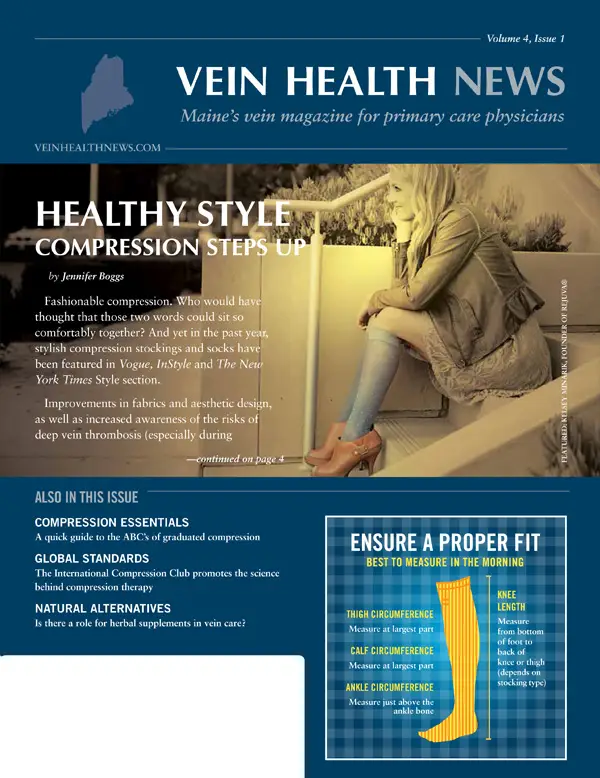
Fashionable compression. Who would have thought that those two words could sit so comfortably together? And yet in the past year, stylish compression stockings and socks have been featured in Vogue, InStyle and The New York Times Style section. Improvements in fabrics and aesthetic design, as well as increased awareness of the risks of deep vein thrombosis (especially during long-distance travel), have all helped to promote consumer interest in graduated compression therapy.
Who should wear it?
According to Judith Brannan, Associate Director for Education and Medical Affairs at SIGVARIS, most adults in the U.S. have some level of venous disease. In fact, 59% of adults have early symptoms, such as leg pain, swelling, or discomfort that worsens throughout the day and these symptoms often progress to more complicated issues, such as varicosities or ulceration.
"Venous disease slowly sneaks up on you," said Brannan. "As you get older you may think that your legs are just tired at the end of the day, but what's really happening is that your veins are physically beginning to weaken".
Graduated, or gradient, compression stockings play a significant role in vein care. They can prevent vein problems from occurring, relieve venous disease symptoms (thus, slowing its progression), and decrease the likelihood of a clot. While wearing compression, patients frequently report that their symptoms are significantly improved, if not completely alleviated.
While most phlebologists (vein specialists) instruct their patients to wear compression before and after vein procedures, there are many people who can benefit from wearing graduated compression. Brannan suggests that people who sit or stand for long periods of time consider compression, as well as women who are pregnant, and those who have close family members who have a history venous disease.
Design evolution
Even five years ago, medical compression socks and stockings looked and felt like medical devices, "uncomfortable, hot, sweaty and beige," said Tom Musone, Director of Marketing for Juzo. But compression companies have continued to research and develop new materials and knitting processes.
"Circular knitting machine technology has gotten better," said Musone. "Every manufacturer has different ways to prepare the machine, depending on what fabrics they use and what they want their product to be—it's all more manageable with the newer machines".
Juzo, for example, makes most of its compression garments out of Lycra, one of the highest quality synthetic compression fiber on the market. Juzo also created the FiberSoft™ process, which wraps each compression fiber with soft, protective threads to lift the compression fiber off the skin. Many compression manufacturers also use improved technologies to control odor and bacteria, and to wick away moisture from the skin. Most also make garments that are free of latex.
According to David Rosenberg, Director of Marketing, North America at SIGVARIS, compression manufacturers are constantly innovating their products. For its part, SIGVARIS has agreements to use Supima and Sea Island cottons, some of the highest quality cotton available, as well as Merino Wool, one of the world's highest grades of wool.
In addition to compression, ancillary products have also made great strides. There are a growing number of accessories on the market to help put on and remove products (known as "donning" and "doffing," respectively). There are also a variety of special creams and sprays to keep skin soft and moist and don't interfere with the fabric.
Compression gets personal
One of the most obvious advancements in compression is the variety of colors, patterns, and styles available for both men and women. Contemporary styles help to encourage people new to compression to give it a try. More importantly, fashionable compression increases compliance among patients who have been prescribed compression by their doctors.
Kelsey Minarik knows first-hand what it's like to have to wear compression. When she was 21, Minarik developed a DVT during a long plane flight. Following her doctor's advice, she wore graduated compression stockings while recovering from the diagnosis. She loved the way compression made her legs feel, but she not the way they made her look: "I had to put granny stockings on to go to the bar!" she said.
The young entrepreneur decided to do something about the dearth of options. Minarik started REJUVA, and in 2010 launched her first collection of compression stockings with sheer and opaque finishes like tiny dots and diamond-shapes. The fashion-patterns were new to the market, as was Minarik's empathetic and fun approach.
"One thing that really struck me when I first started wearing compression was the sterility of the whole enterprise," said Minarik. "It was such a downer, so we try to add some levity to it, to make it accessible".
Minarik also innovates by listening closely to the actual user, the customers themselves. For example, core wearers (Minarik counts herself among their ranks) consistently complained about stockings pinching and binding behind the knees, so REJUVA designers made small adjustments to correct that feature. The company works with Dr. Nisha Bunke, MD, FACPh at LaJolla Vein Care for medical feedback on new products, and everything is tested on machines post-production to confirm that each garment offers the advertised level of compression.
How to choose the right garment
Although style may be important to a compression wearer, it can't be the only factor when choosing a garment. A patient (or physician) should consider as many factors as possible, including comfort, ease of use, durability, and actual therapeutic benefits. In other words, if the stockings are inexpensive but aren't durable, that's not much of a value. Similarly, if stockings are the correct medical grade but uncomfortable, then they're likely to be buried in a dresser drawer.
"If you don't wear the garment, you've wasted your money and you don't receive any health benefits," said Tom Musone of Juzo. "The more attributes you can satisfy, the better your compliance is going to be".
It is also critical to buy true medical graduated compression that is manufactured and tested correctly. Consumers should be wary about buying a less expensive brand or one made by an unproven company, as they might be ineffective—or worse, harmful if it provides too much or too little compression in the wrong area.
"Not all compression is the same," said SIGVARIS' Judith Brannan. "When a reputable company states a particular compression strength on its label, you can feel confident".
Brannan also suggests consulting with a vein specialist, certified orthotic fitter, or talking with someone at a durable medical supply store, rather than "just going to a big retailer or local drugstore" to buy compression. In fact, physicians should prescribe compression stockings; prescriptions should clearly detail the diagnosis, style (knee-high, thigh-high, or pantyhose) and clinical level of compression.
A good fit is essential for graduated compression garments to work properly. Different brands can vary in size and length, so each person should try a variety of brands and styles to see what works best. Some brands offer petite or plus sizes, or options for pregnant wearers. In any case, buyers of compression should know what the store's return policy is, whether purchasing online or in person.
Feeling healthy
As physicians and the general public learn more about venous disease and DVT, the compression industry will continue to create products that are more wearable and fashionable while still being clinically effective. The benefits of graduated compression are numerous and not limited to venous patients or the elderly. Most adults can receive relief for tired, achy or swelling legs, in addition to preventing vein disease or blood clots.
"What I'd like to encourage is earlier use," said Brannan. "The sooner that you can wear compression, the more likely you are to slow down the progression of venous disorders, and your legs will just feel healthier".
SEVEN COMPRESSION ESSENTIALS
- "TEDS ARE FOR BED." T.E.D.—an acronym for Thrombo Embolic Deterrent—hose are often worn after surgery to help prevent DVT. They work well for this purpose, but they are only 8-15 mmHg of compression and are not the same as graduated compression stockings. TED hose do not help with the symptoms of venous disease, nor do they halt the progression of venous disease.
- MEDICAL COMPRESSION PROVIDES A GRADIENT OF PRESSURE AGAINST THE LEG. The pressure is highest at the foot and ankle and gradually decreases as the garment rises up the leg. This pressure gradient makes it easier for the body to pump blood up towards the heart (the normal direction) and more difficult for gravity to pull blood downward.
- GRADIENT COMPRESSION IS EXPRESSED IN MILLIMETERS OF MERCURY, OR MMHG. It is the measurement of how much compression or "squeeze" that is placed on the leg: the higher the number, the greater the compression.
- STOCKINGS ARE GRADED ON THE BASIS OF THE STRENGTH OF THE COMPRESSION AT THE ANKLE. Commonly prescribed strengths include 15-20 mmHg for patients with spider veins, or patients with varicose veins but only mild symptoms or swelling; 20-30 mmHg for mild to moderate varicose veins; 30-40 mmHg for patients with varicose veins associated with symptoms such as pain and swelling.
- FOR PATIENTS WHO HAVE HAD VENOUS ULCERS OR DVT, A 30-40 MMHG STOCKING IS BEST. For conditions such as lymphedema, up to 50-60 mmHg stockings or inelastic bandages are often recommended.
- PATIENTS SHOULD NEVER WEAR COMPRESSION STOCKINGS TO BED. That is, unless the patient is specifically cleared by a provider, including those who suffer from Restless Leg Syndrome.
- POTENTIAL CONTRAINDICATIONS INCLUDE ARTERIAL DISEASE, DIABETES AND CONGESTIVE HEART FAILURE. However, that doesn't mean that those who suffer with these conditions can't wear compression. A very low compression might be useful under those circumstances.
Collaboration
More Than Just Stockings
By Vein Health News Staff
In 2005, Dr. Hugo Partsch—a global leader in the fields of phlebology, lymphology angiology, and dermatology—created the International Compression Club (ICC). The forum links doctors, researchers, and the compression industry in an effort to promote the science behind compression therapy. The ICC also proposes research trials and strives to find consensus on such issues as classification of compression material, guidelines for care and evidence-based indications for compression treatment.
According to Dr. Partsch, compression is the cornerstone to counteract gravity, which causes edema and insufficiency to pump blood back towards the heart. Compression therapy offers a variety of treatment methods, including velcro devices (which can be applied and readjusted by the patients themselves), multi-layer elastic wraps, bandages, and intermittent pneumatic compression (IPC) pumps.
"Compression therapy is more than just stockings!" said Dr. Partsch. "We need to differentiate between continuously exerted compression pressure as achieved with elastic stockings and stiff material, and pump devices that inflate intermittently for patients who are immobile".
Dean Bender, President of circAid Medical Products and ICC member, noted that the acceptance and use of adjustable compression is continuing to expand significantly in the U.S. and abroad. Devices such as the CircAid can help the patient and clinician control and maintain the dosage of compression, something that is not possible with bandages.
Compression therapy is an extremely effective treatment modality, but it is under used in important areas of medicine due to a lack of understanding. Although the ICC is not a regulatory group, its members keep working toward evidence-based data that will improve internationally accepted regulations and guidelines. They also strive to educate practitioners on how to apply good consistent compression—and how to get their patients into the right form of compression.
Vein Tech
Arnicare
By Jennifer Boggs
Arnica montana is a daisy-like flower native to the mountains of Europe. It has been used for centuries to relieve pain and inflammation. While the plant extract can be toxic when ingested in concentrated doses, it is safe to use when prepared with an appropriate amount in topical form. In fact, Arnica is one of the most popular homeopathic medicines in the world, used to treat muscle and joint pain, swelling, soreness and bruising.
Arnicare is a line of topical medication produced and distributed by Boiron, a well-known homeopathic medicine supplier in the U.S. Arnicare is available in cream, gel and ointment, all of which are free of parabens, artificial colors and perfumes. According to Raphaele Cohen-Bacry, pharmacist and Professional Education Specialist at Boiron, the purpose is the same for the cream and gel but the textures are different. The cream is smooth, easy to massage and is ideal for areas where skin may be dry or sensitive. The gel is water-based, non-greasy and is popular with athletes because it has a cooling effect and absorbs quickly into the skin.
The herbal extract content is the same in both gel and cream (7% of Arnica montana 1X) and less in the ointment (4% of Arnica montana 1X), which is intended to stay on the skin longer and release the active ingredients over an extended period. Because the ointment adheres to the skin longer, it is recommended for injuries such as tendon or ligament sprains.
Phlebologists and plastic surgeons, in particular, prefer Arnicare in cream or gel form to help diminish bruising after vein procedures or cosmetic surgery. The Arnica montana extract contains polysaccharides that increase phagocytosis—the process by which large white cells digest foreign particles, cell debris and microorganisms—which promotes a quicker disappearance of bruising.
In addition to reducing pain and bruising, Arnicare also has an anti-inflammatory action due mainly to one of its active compounds called helenalin. In low concentrations, helenalin inhibits the activation of the transcription factor NF-kb. When there is a trauma or another stressful situation, the NF-kb is activated and stimulates the production of inflammation agents. By inhibiting this phenomenon, helenalin decreases the number of inflammation mediators, therefore reducing the inflammation response, as well as swelling.
Dr. Daniel Arnold, a board certified General Surgeon and practitioner at the Vascular Vein Centers in Florida, uses Arnicare with every patient. Arnicare should not be applied to damaged skin, open wounds nor mucous membranes, but because most modern vein treatments don't require incisions, Dr. Arnold will have his Medical Assistant coat the procedure area on the patients' legs with Arnicare directly after the procedure to help reduce discomfort.
Dr. Arnold also recommends that every patient use Arnicare gel as part of post-procedure recovery: "Since procedures involve entering the vein, bruising is often likely to occur, so we talk to our patients beforehand and encourage them to use it under their compression stockings. We think it's an excellent component of the recovery phase".
The recommended frequency of application for an Arnicare topical is three times a day. When used as directed it has a low risk of side effects, no contraindications and will not interact with other medications, herbs, or supplements. A small number of people are allergic to plants from the daisy family, and therefore may be allergic to Arnica montana. Arnicare gel and cream cost between $7 and $11 (depending upon the product size) and are widely available in both national and independent pharmacies.
Alternative Medicine
Treating The Symptoms Of Vein Disease, Naturally
By Benjamin Lee
Vein disease, also known as venous disease, is defined as the impairment of blood flow towards your heart. It includes, but is not limited to, varicose veins. While there are proven, minimally invasive treatments for vein insufficiency, such as endovenous laser ablation (EVLA) and sclerotherapy, interest in alternative options for preventing, treating, and stemming the progression of vein disease continues to grow. Studies show encouraging potential for many herbal supplements and alternative medications, as current research promises to advance our understanding of these natural treatments.
Things to consider
It is important to understand that while herbal medications may help eliminate some symptoms, such swelling, aching, and tired legs, the benefits are limited to the period of time that the medication is being taken. They do not fix the underlying cause of the symptoms. Patients experiencing symptoms, and those who think they may be at risk of vein disease, should be evaluated by a vein specialist and learn their options for treating the underlying cause. It is important to ensure that symptoms are not an indication of a more serious medical condition, such as phlebitis or thrombosis. Something else to note: most alternative medications are not regulated in the U.S. Anyone considering taking them (for vein treatment or otherwise) should understand the proper dosage recommendations, risks, and side effects. Some herbal supplements can be toxic if taken improperly.
Plant-based remedies
Rutin/Rutosides: Rutin, also referred to as rutosides, is a compound found in some plants and has become a widely accepted alternative treatment for venous disease symptoms. Rutin is a citrus flavonoid glycoside found in food such as buckwheat, asparagus, berries, and the rinds of some citrus fruits. Studies indicate that this flavonoid acts on blood vessel health, positively affecting varicose veins, superficial venous insufficiency, and venous ulcers. Rutins have been found to improve circulation, strengthen capillaries, reduce inflammation, and improve venous edema. Forms of rutin are used in Europe, Mexico and other Latin American countries for the treatment of venous disorders, and it is widely available as a supplement. While studies continue into its potential, rutin appears safe for short-term treatment.
Diosmin: Diosmin, a citrus-based compound, is used to treat various disorders of blood vessels, including varicose veins and poor circulation in the legs. It is considered a "medical food" by the FDA and is available with a doctor's prescription.
Horse Chestnut Extract: Horse chestnut extract, the common name for aesculus hippocastanum, is a promising natural medicine for treating chronic venous insufficiency. It is an anti-inflammatory herb that has been found to promote normal tone of the vein wall, thereby improving circulation through the veins. Benefits can include reduced leakage of the capillaries and a reduction in lower leg swelling. While horse chestnut extract is not regulated in the U.S., it is available as a supplement, and it is a popular treatment in Europe, where it is considered an effective alternative for compression stockings. Studies support the potential of horse chestnut extract, and it appears to be safe and effective when used properly. However, additional research of these findings is required, and proper processing of supplements is critical to avoid toxicity and side effects.
Gotu Kola: Gotu kola, also called centella asiatica, is a trailing plant native to Asia. Its many uses include the treatment of venous insufficiency and the healing of wounds. Gotu kola stimulates the production of collagen, a protein found in the fibrous tissue of blood vessels. Studies have reported its effectiveness in healing vein walls and tissues. Its benefits include reduced swelling and improved circulation and vascular tone. Further studies are needed to understand more about gotu kola. It is currently available in supplement form and in topical form to treat wounds.
Red Vine Leaf Extract: Red vine leaf extract, also called grape leaf or folia vitis viniferae, has undergone studies that support its potential for the treatment of venous insufficiency. The antioxidants in red vine leaf can strengthen blood vessels and reduce inflammation, and it is used to maintain leg circulation and improve tired, heavy, aching legs. It is most commonly used in France and the U.K. Comprehensive safety studies on red vine leaf have not yet been performed, but it is a registered over-the-counter medication in some European countries. It is widely available in capsules.
Butcher's Broom: Butcher's broom is the common name for ruscus aculeatus, a berry-producing evergreen shrub found in the Mediterranean. It is recognized for its positive effect on blood flow. Recently, European interest in the herb has focused on its potential for treatment of varicose veins, and it has been approved as a treatment for chronic venous insufficiency by Germany's regulatory commission for herbal therapies. Research conducted with butcher's broom has shown decreases in leg swelling, pointing toward its efficacy. Comprehensive safety studies, however, have not been reported.
Alternative treatments
Elevation is a simple, yet powerful, tool that can help improve blood circulation in the veins and provide some relief to venous symptoms. In some cases, elevation of the legs can alleviate pain or swelling that is the result of early stage venous disease. Elevation of the legs above the heart for a period of three minutes, several times throughout the course of the day, can encourage blood flow from the legs and decrease the pooling of blood. A vein specialist can guide patients on the most effective elevation techniques.
Graduated compression therapy is another powerful alternative for the treatment and management of vein issues. (Read the compression cover story in this issue to learn more.) Regular calf contractions to prevent circulatory stagnancy are recommended for the prevention of venous disease and for easing its symptoms. Exercises for the feet, toes, and ankles (tapping the toes and flexing the feet, for example) can help blood flow in the legs if done several times a day.
Because venous disease has a strong genetic component, prevention can help those with a family history to avoid blood clots and ward off symptoms. Important components of prevention include maintaining a exercising regularly, abstaining from smoking, and compression socks when appropriate.
Patient Perspective
One Patient's Perspective: Home Run Results
By Benjamin Lee
Brenda Harmon loves to play softball. The 53 year-old Mainer has been playing since she graduated high school in 1979. Over the years Brenda has missed only two seasons, but she was sure that she'd have to give up the sport because of her legs.
"I was having a lot of leg cramps, and when I went up one flight of stairs it felt more like ten," described Brenda. "After walking just a quarter mile, everything in my legs would tighten up so badly I'd have to stop every few minutes until the pain subsided".
When Brenda would sit, even in a recliner, the backs of her calves would feel so tight it felt like "[her] Achilles' tendon would snap". That was tough for a school bus driver for kids with special needs. (After 30 years, she still says it's "the best job ever.") Brenda lived with the discomfort for more than ten years, assuming it was a regular part of the aging process. She would sometimes be woken in the middle of the night from cramping in her legs. She also had a dark discoloration above the ankles, a condition she shares with her father.
It wasn't until Brenda went to a podiatrist for a foot problem that she learned she might have an issue with her veins as well. The doctor described Brenda's leg situation "to a tee" and suggested that she visit a phlebologist, or vein specialist, for an evaluation.
After a thorough evaluation and ultrasound examination, the phlebologist recommended EVLA (endovenous laser ablation) for both of her legs to "seal off" the troublesome veins that were identified during the ultrasound exam. Brenda first had the procedure done on her left leg, and the results were almost immediate.
"I had no cramps that night when I went to bed and then no cramps during the day. It was so great to see those results so quickly," said Brenda.
She went in at a later date to have her right leg done, and at follow ups for both legs she saw the discoloration on her shins had also improved. Brenda did have some challenges with the post-procedure requirements. She admits putting on the graduated compression stockings was difficult at first, but once she began using ordinary rubber cleaning gloves to grip them, it was "100 percent easier".
Though it's only been a few months since her vein treatments, Brenda is thrilled with the results so far, as well as with the process. "I would say to anyone who is on the fence about this that it's such a minor procedure, and the outcome is so worth it," she said. "I was in and out in less than two hours and back to work the next day".
Brenda also noticed right away that walking up stairs didn't feel labored or painful anymore. But more importantly, her softball career is safe. Her legs feel so good she may even play catcher for a few years.
Concerned about your vein health?
Contact the Vein Healthcare Center for an evaluation.
Contact Us